Why Some NEC Phone Systems Are Already Orphaned Hardware (SL2100)
When NEC announced its exit from the on-premise phone system business in May 2024, the headline was clear: support ends March 2026. For businesses running NEC systems, the countdown began. Then in February 2025, Forerunner Technologies acquired NEC’s Americas UC business, and suddenly the story split in two.
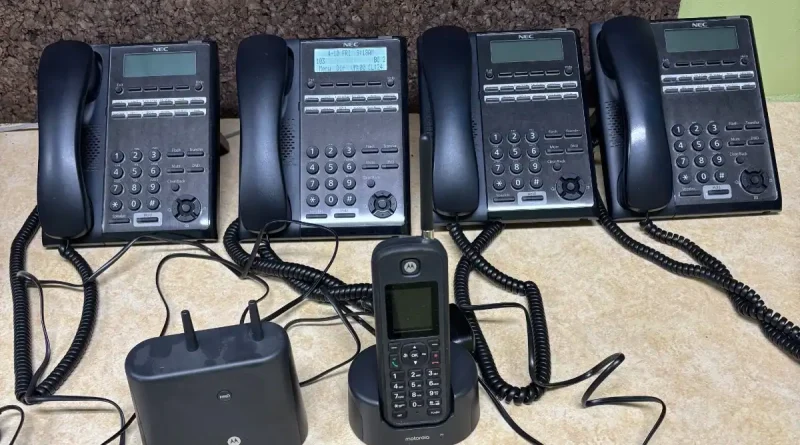
SL2100 users got something different. Software support, yes — also through 2030. But the manufacturing plant is permanently closed. No new CPUs. No new main control boards. No expansion chassis. When existing inventory runs dry, that’s it. The most widely deployed NEC system in small business is now, functionally, orphaned hardware.
The Hardware Lottery No One Knew They Were Playing
This is the part of the NEC exit story that doesn’t get enough attention. Two product lines. Same manufacturer. Same exit announcement. Same Forerunner acquisition. Completely different hardware futures.
The SV9100 benefits from continued production at NEC’s Japan facility, which rolled out new SV9000 hardware as recently as 2025. Businesses running that platform have a legitimate stay-on-platform option if they’re willing to work through the Optus channel and establish software assurance agreements. It’s not ideal — the broader installer ecosystem has moved on — but it’s viable.
The SL2100 doesn’t have that. According to multiple industry sources, including confirmation from Forerunner’s own webinar in early 2025, the SL2100 manufacturing plant has been shut down. The hardware pipeline is closed. What exists in reseller warehouses and refurbished parts suppliers is the total remaining global supply.
Same brand. Same year. One product line with continued manufacturing, one without. Businesses didn’t choose which lottery ticket they bought when they installed these systems three or five years ago. They’re finding out now.
What Happens When the CPU Fails
Here’s the scenario that keeps business owners up at night: your SL2100 has been running fine. You’ve maintained it. You’ve kept up with software patches. You even purchased extended support when Forerunner offered it. Everything is compliant.
Then the main control board fails.
In a normal hardware lifecycle, you call your vendor. They order the part. A technician swaps it out. You’re back online in a day or two. With the SL2100, that process now depends entirely on whether your reseller still has that specific component in stock — or can source it from the shrinking refurbished parts market.
If they can’t, your phone system is irreparably broken. No amount of software support changes that. Forerunner can’t manufacture a replacement CPU. NEC isn’t making them. The secondary market is finite and getting smaller.
This isn’t a theoretical risk. Multiple resellers now offer “advance replacement plans” specifically because they understand the exposure. These plans guarantee overnight shipment of replacement components — but only as long as inventory lasts. Once those warehouses empty out, even the insurance policy expires.
The Refurbished Parts Calculation
Businesses staying on SL2100 past 2026 are effectively betting on the longevity of the secondary parts market. Companies like PCLiquidations, NEC Phone Supply, and Wholesale Telecom have built businesses around refurbishing discontinued telecom hardware. They’re NEC-certified technicians. They know these systems inside out. They can keep an SL2100 running well past its planned obsolescence — as long as parts remain available.
But that market operates on scarcity economics. As inventory shrinks, prices rise. Components that were commodity purchases in 2023 become expensive, hard-to-source items by 2027. And the calculus gets harder every quarter: do you spend $800 on a refurbished expansion card for a system with no manufacturing future, or do you take that budget and put it toward migration?
Emergency migrations are always more expensive than planned ones. When a hardware failure forces the issue, you lose negotiating leverage. You lose the ability to run parallel testing. You lose the time to train staff properly. You’re making decisions under pressure, which is exactly when mistakes get expensive.
Why Planning Beats Gambling
The honest assessment for SL2100 users in 2026: you’re running on borrowed time, and the clock is hardware-dependent, not software-dependent. Forerunner’s support extension is real, but it doesn’t change the manufacturing shutdown. It doesn’t replenish parts inventory. It doesn’t make your main control board less likely to fail as it ages.
Some businesses will ride it out and win that bet. Their hardware will stay healthy long enough to migrate on their own schedule, and they’ll look back on the Forerunner acquisition as a useful grace period that let them avoid a panic replacement in 2026.
Others won’t. A power surge, a failed cooling system, a component reaching end of life — any of these forces an immediate decision, and at that point the decision is made for you.
The question isn’t whether the SL2100 is a good phone system. It was, and many are still running fine. The question is whether staying on a platform with no manufacturing future and a finite parts supply is a risk your business can absorb, or whether planning a migration now — while the system is still working — is the less expensive path.
For SV9100 users, that calculation includes a genuine stay-on option. For SL2100 users, it’s a countdown to parts exhaustion. Same NEC exit. Different hardware lottery. And only one of them has a factory still making replacements.