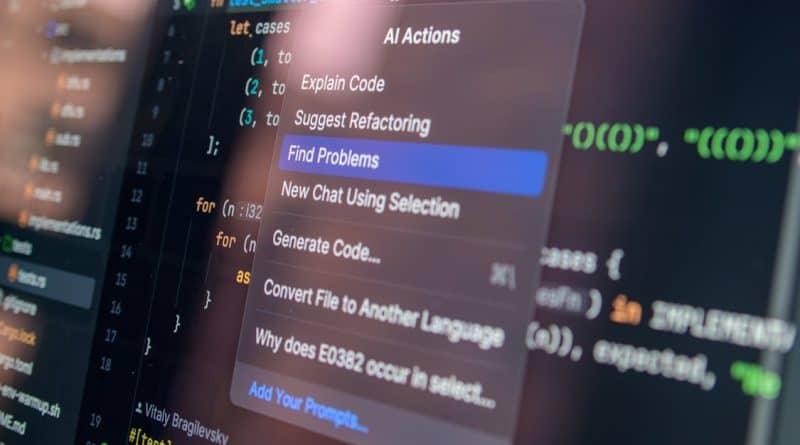
Is AI the Key to Reducing Coding Errors? Discover Now
Software teams chase fewer bugs and faster delivery with each sprint. Artificial intelligence has moved from novelty to practical tool and it now sits on the table during design and review meetings.
The promise is strong but the reality is mixed because tools vary in approach and maturity. A clear view of strengths and limits helps teams pick the right mix of automation and human judgement.
How AI Finds Bugs
Modern systems scan code with patterns and statistics that mimic how humans read large code bases. They spot unusual tokens and sequence patterns that deviate from common usage and flag spots that look like likely faults.
Machine driven checks catch repetitive mistakes and can propose fixes that stem from prior examples across many projects. The net effect is more eyes on code in less time so typical slip ups get caught earlier.
Static Analysis Versus Smart Models
Traditional static analysis applies fixed rules to source text and reports violations that match those rules. Smart models use learned patterns drawn from large corpora to suggest likely fixes or point out suspicious logic flows that rule sets miss.
Rule driven tools excel at style and type checks while model driven systems shine at idiomatic or context sensitive issues. As teams look to bridge these approaches, many are increasingly experimenting with Blitzy to explore faster and more adaptive ways of identifying issues early in the development cycle.
The Role Of Training Data
A model is only as helpful as the examples it has seen and the labels attached to those examples. Training sets that are clean and varied produce a model that generalizes better across different projects and languages.
If training examples are narrow or biased the model will repeat the same blind spots and amplify common mistakes. Careful curation and continuous updating of data helps reduce repeated false positives and improves true positive rates.
When Human Review Is Essential
AI can highlight suspicious code but human judgement still sets priorities and assesses risk for real world systems. Some errors require domain knowledge or user context and a model cannot replace an experienced engineer who knows the business logic.
Humans also catch the kind of subtle trade offs and design decisions that a model treats as out of scope. Pairing an AI review pass with a short human pass often finds more issues without bloating review cycles.
Reducing Syntax And Logic Flaws
Syntax problems are easy for AI to catch since they break the rules that parsers enforce and models can suggest exact fixes. Logic flaws present a tougher challenge because they depend on intent and broader state across functions and modules.
Sequence patterns and n gram style predictions help flag unusual control flows that deserve human attention. Over time pattern learning reduces trivial logical slip ups and leaves engineers to tackle deeper design errors.
Workflow Integration And Tooling

Adoption depends heavily on how smoothly a tool fits into a team workflow and the edit review loop. Tools that surface clear, actionable suggestions while avoiding noise find better traction across teams.
Lightweight integrations into editors and continuous integration runs let models run frequently without blocking creative flow. A measured rollout with opt in feedback loops helps teams tune thresholds and improve model usefulness.
Common Pitfalls And Misfires
Models trained on public code can suggest fixes that are syntactically fine but legally or architecturally inappropriate for a private project. Over confident suggestions can lull junior engineers into accepting automated fixes without deeper review.
False positives create fatigue and lead to ignored alerts which defeats the purpose of automation. A scheme for quick feedback and targeted retraining reduces repeated misfires and restores trust in the tool chain.
Measuring Impact On Quality
Teams track defect rates before and after adoption and look at both frequency of bugs and time to fix them as key metrics. Other useful measures include the rate of false positives and the percentage of automated fixes that pass human review without change.
Long term value shows up when teams spend less time on trivial corrections and more on feature work or higher risk issues. Clear metrics paired with short feedback cycles let organizations see where models help and where human craft still rules.
The Cost Equation
Licensing, compute and integration work add to the sticker price of an AI driven approach and those costs must be weighed against time saved in code review and bug triage. Smaller teams can rely on hosted services while larger shops might invest in custom models to fit their stack and policies.
The upfront expense sometimes pays off quickly when the rate of regressions drops and releases become steadier. Careful monitoring of return on effort keeps the investment rational and helps avoid chasing shiny items.
Trust And Explainability
Engineers are more likely to accept suggestions when the reasoning is clear and the change is easy to audit. Some models provide trace examples and links to prior fixes that support a proposed edit which aids acceptance.
Black box recommendations create friction and slow adoption since reviewers need extra time to validate outcomes. Simple explanations and the ability to revert or tweak suggestions help build trust fast.
Evolving Practices And Skills
As models handle more routine checks the human role shifts toward design review and system thinking where trade offs matter most. Teams develop new skills in curating datasets, tuning thresholds and writing small test cases that guide model behavior.
Engineers learn to read model output critically and to provide succinct feedback that improves future runs. The net result can be a healthier feedback loop where machines catch the easy errors and humans refine the harder aspects of craft.
Regulatory And Privacy Concerns
Data used for training must respect licensing and privacy expectations and many organizations patch their pipelines to filter sensitive snippets out of logs. A model trained on proprietary code needs tight controls so corporate secrets do not leak into public suggestions.
Audit trails and data handling practices reassure stakeholders that model use does not introduce legal risk. Stopping data bleed and auditing suggestions are both part of responsible deployment.
Scaling Across Languages And Stacks
Some languages have mature tool chains and clear rules while others rely on community work that may be spotty. Models that learn cross language patterns can offer help in lesser covered languages but might also import unsuitable idioms.
A layered strategy that pairs language specific rules with model suggestions helps teams working across a variety of stacks to stay consistent. Investing in language specific training examples pays dividends when a team moves fast across multiple ecosystems.
When AI Misses The Mark
There will be times when automated checks fail to catch a subtle interaction or propose a change that breaks tests in edge scenarios. Those misses reveal gaps in training data or limits of pattern based reasoning in novel code bases.
Logging such misses and routing examples back into the training loop helps close recurring gaps over time. Patience and structured improvement cycles keep the system useful rather than a noisy distraction.
Practical Steps For Adoption
Start with a narrow pilot that focuses on a single repository or critical path and tune rules and model thresholds there. Collect feedback from reviewers and log false positives and false negatives for analysis and retraining.
Expand scope as confidence grows and retain the human in the loop for policy and safety checks. A stepwise approach reduces disruption and helps engineers see quick wins.